
1-805-484-2992
Quotes - Engineering - SalesCondensate Drainage
Removing the water from the air is only half the job; it then has to get out of the vessel.
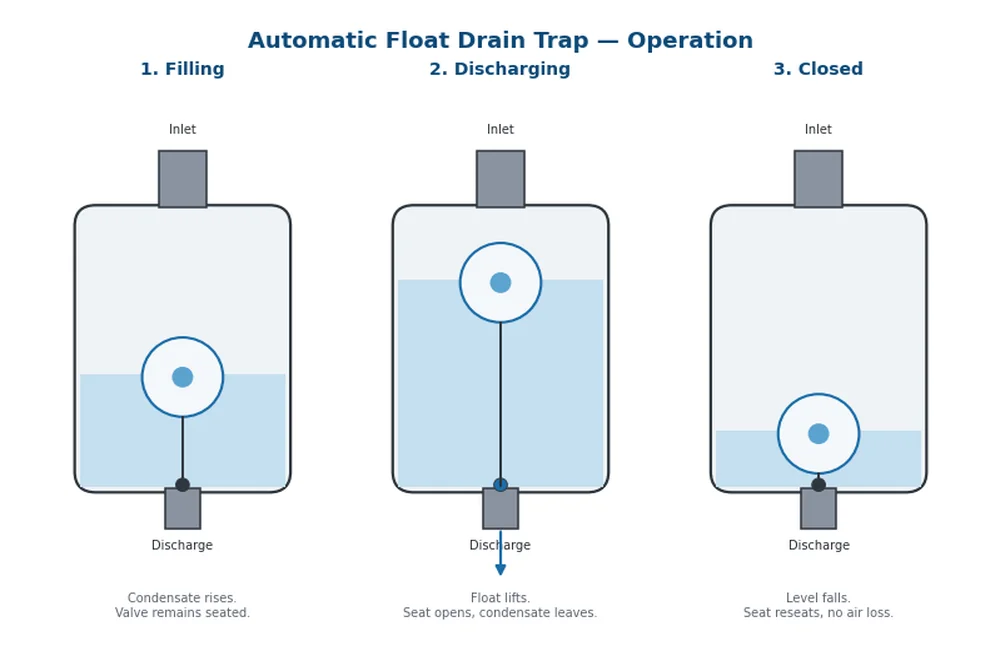
Every separator, receiver and aftercooler sump fills with condensate and has to be drained. A manual valve depends on someone remembering; a cracked-open valve wastes compressed air around the clock. An automatic float trap does neither. Condensate flows into the trap chamber, the float rises, and a lever opens the discharge port until the water is gone and the float drops again. Air stays in the system.
 Separator Sumps
 Receivers
 Drip Legs
 Filter Bowls
Which Trap?
Match the trap to the flow and the separator.
Checklist
- Systems to 500 CFM, separators to S07: SAC120 (1/2")
- Systems over 500 CFM, separators S08 and up: SAC100 (1")
- Corrosive condensate or high pressure: SAC010 stainless
- Long drain leg or trap below the vessel: add the vent adapter
IPAC Ranges
- Automatic Drain Traps — Float-operated condensate traps in 1/2 and 1 inch sizes
- Horizontal Separators — Sixteen current sizes from 127 to 25,000 SCFM, plus the three HiROSS-era cast units they replaced
- Vertical Separators — Seven sizes from 900 to 5,800 SCFM with a side inlet and top outlet
| RANGE | TYPE | COVERS | RATING | PART NUMBERS |
| Automatic Drain Traps | Automatic Condensate Drain Trap | Float-operated condensate traps in 1/2 and 1 inch sizes | 230 PSIG aluminum; higher in steel and stainless | 3 |
| Horizontal Separators | Centrifugal Moisture Separator | Sixteen current sizes from 127 to 25,000 SCFM, plus the three HiROSS-era cast units they replaced | 200 PSIG (230 PSIG WS01-WS03) | 19 |
| Vertical Separators | Centrifugal Moisture Separator | Seven sizes from 900 to 5,800 SCFM with a side inlet and top outlet | 200 PSIG | 7 |
More About Condensate Drainage
How the SAC Trap Is Built
The IPAC SAC trap discharges upward, so it can be mounted below the separator and still lift the condensate to a drain line, and it carries an external hand valve so an operator can blow it down on a walk-round without tools. An optional vent adapter equalises pressure where a long drain leg would otherwise air-lock the trap. Standard bodies are aluminum rated 230 PSIG; cast iron, carbon steel and stainless steel bodies take the rating to 1,010 PSIG.
Choosing Between SAC120 and SAC100
Selection is simple. The 1/2 inch SAC120 handles systems to about 500 CFM and is the trap named on every A Series aftercooler and every separator through the S07. The 1 inch SAC100 covers larger flows and the S08 separator and up. Condensate from an oil-lubricated compressor is an oil-water mix and should go to a separator or treatment unit, not straight to drain.
Related
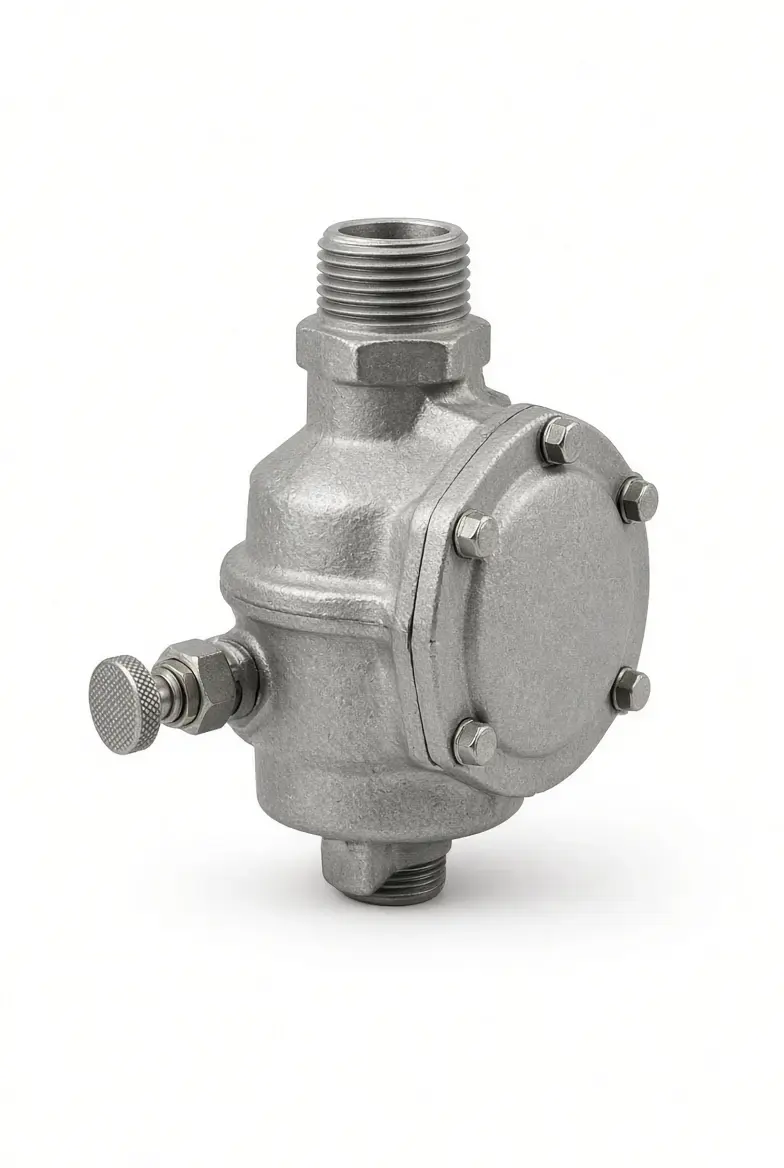
SERIES • DRAIN TRAP
Automatic Drain Traps
Float-operated condensate traps in 1/2 and 1 inch sizes.
+ Learn More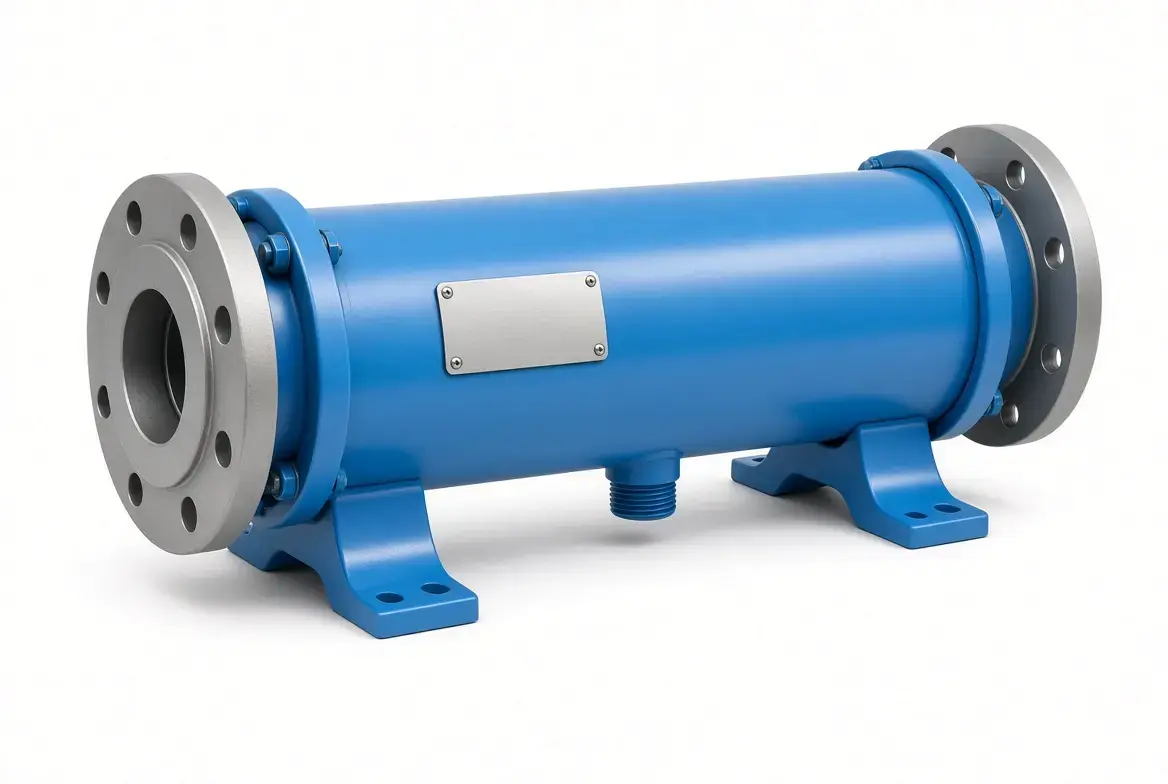
SERIES • SEPARATOR
Horizontal Separators
Sixteen current sizes from 127 to 25,000 SCFM, plus the three HiROSS-era cast units they replaced.
+ Learn More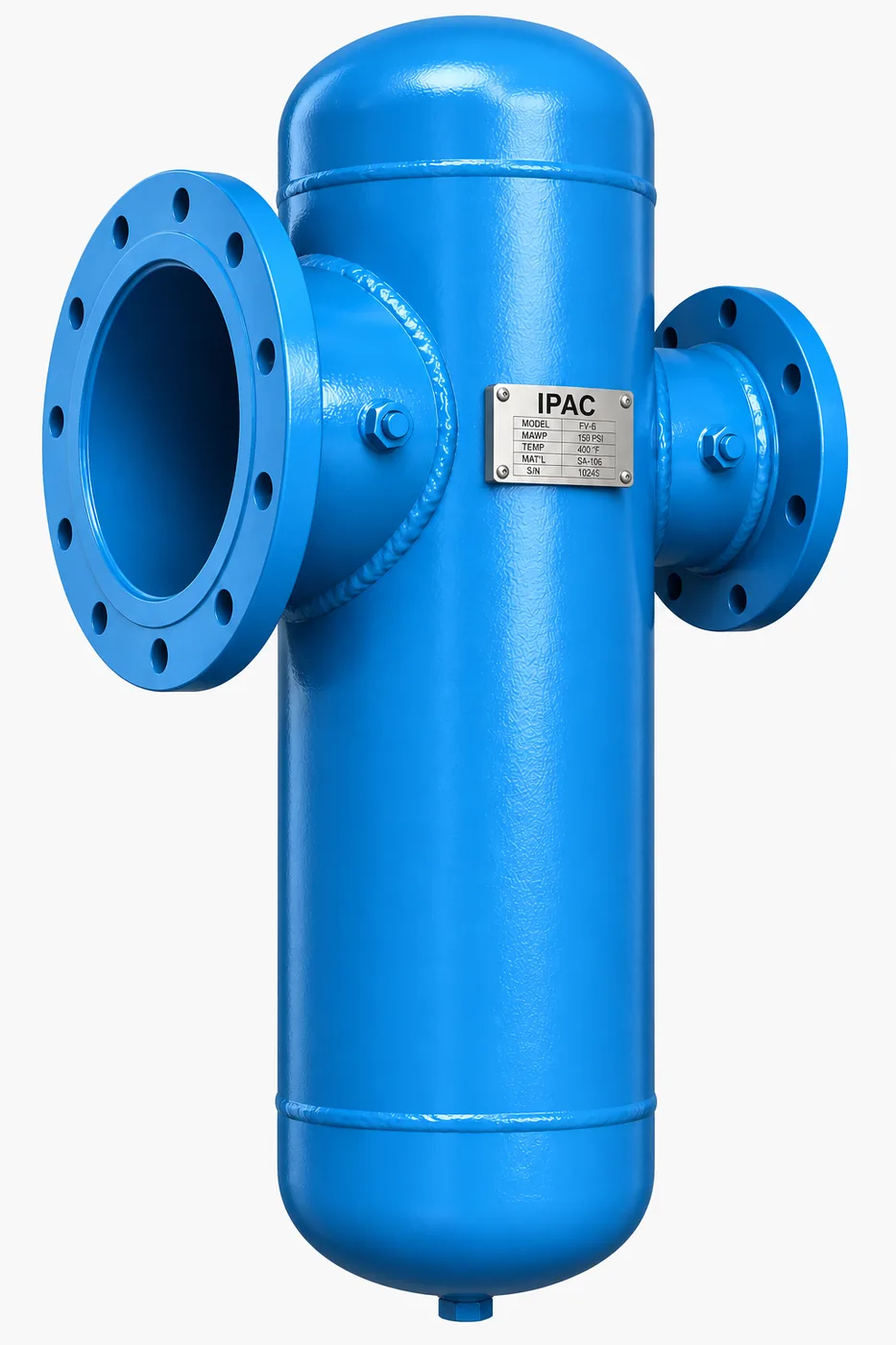
SERIES • SEPARATOR
Vertical Separators
Seven sizes from 900 to 5,800 SCFM with a side inlet and top outlet.
+ Learn MoreCommon FAQs
Because it leaks compressed air around the clock. A 1/16 inch opening at 100 PSIG wastes several CFM continuously - a measurable slice of a small compressor's output. A float trap opens only when there is water to pass.
Yes. The SAC discharges upward, so it can sit below the vessel and lift the condensate to a drain line. Where the drain leg is long, fit the vent adapter so the trap does not air-lock.
From an oil-lubricated compressor it is an oil-water mixture and should go to an oil-water separator or treatment unit, not to a storm drain. From an oil-free machine it is essentially water with whatever the intake air carried.