
1-805-484-2992
Quotes - Engineering - SalesLube Oil Cooling
A rotary screw compressor injects oil to seal, lubricate and cool the airend, and that oil picks up most of the heat of compression.
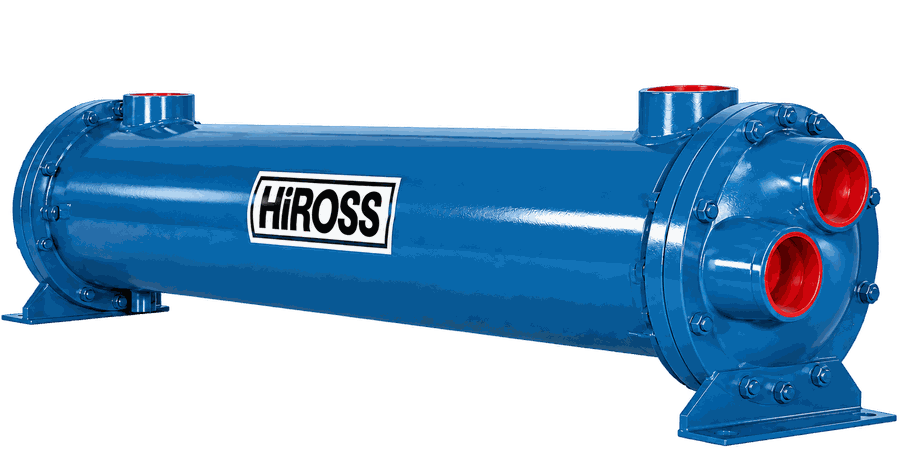
The oil cooler on a lubricated rotary screw is as important as the aftercooler: it sets the airend discharge temperature, and through that the amount of water that condenses into the oil. Too cold and water accumulates in the sump; too hot and the oil varnishes. Compressor builders fitted STA coolers for this duty because the shell and tube form takes full oil flow with little pressure drop and the cast iron bonnets come off for cleaning without disturbing the piping.
 Rotary Screw Oil
 Gearboxes
 Transformers
 Test Stands
Replacing a Compressor Oil Cooler
What to read off the old unit.
Checklist
- STA model number - shell diameter and length are in it
- Number of passes (count the bonnet connections and partitions)
- Connection sizes and which side is oil
- Tube material if known, and cooling water source
IPAC Ranges
- Shell & Tube Oil Coolers — Seventeen sizes from a 3 inch shell 14 inches long to an 8 inch shell 72 inches long
- Water-Cooled 51 Series — Fifteen shell and tube models from 38 to 4,785 SCFM, all 51-1/8 inches long
| RANGE | TYPE | COVERS | RATING | PART NUMBERS |
| Shell & Tube Oil Coolers | Shell & Tube Oil Cooler | Seventeen sizes from a 3 inch shell 14 inches long to an 8 inch shell 72 inches long | Call for rating | 17 |
| Water-Cooled 51 Series | Water-Cooled Aftercooler | Fifteen shell and tube models from 38 to 4,785 SCFM, all 51-1/8 inches long | 200 PSIG (300 PSIG small NPT units) | 15 |
More About Lube Oil Cooling
Gearboxes, Transformers and Test Stands
The same cooler serves gearboxes, torque converters, transmissions on test stands and transformer oil circuits. For oil that must not be contaminated by a tube leak, the water side can be run at lower pressure than the oil side so any leak is oil-to-water. Copper tubes are standard; copper-nickel or stainless steel are fitted where the cooling water is brackish or treated, and zinc anodes are available on the bonnets.
Two Passes or Four
Pass selection trades heat transfer against water-side pressure drop: four passes give higher water velocity and better performance from a given size, two passes give lower pressure drop. The STA charts publish both for every model.
Related
SERIES • OIL COOLER
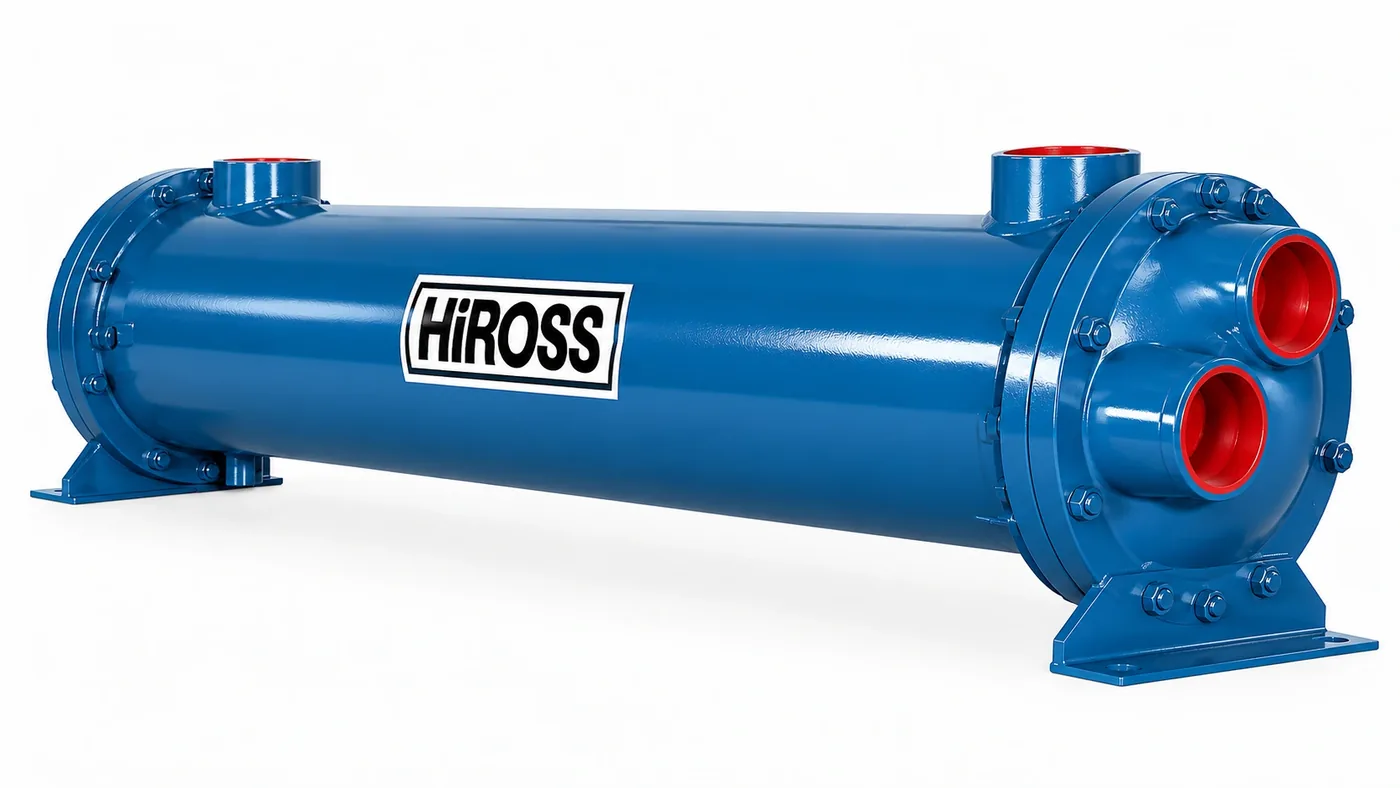
Shell & Tube Oil Coolers
Seventeen sizes from a 3 inch shell 14 inches long to an 8 inch shell 72 inches long.
+ Learn More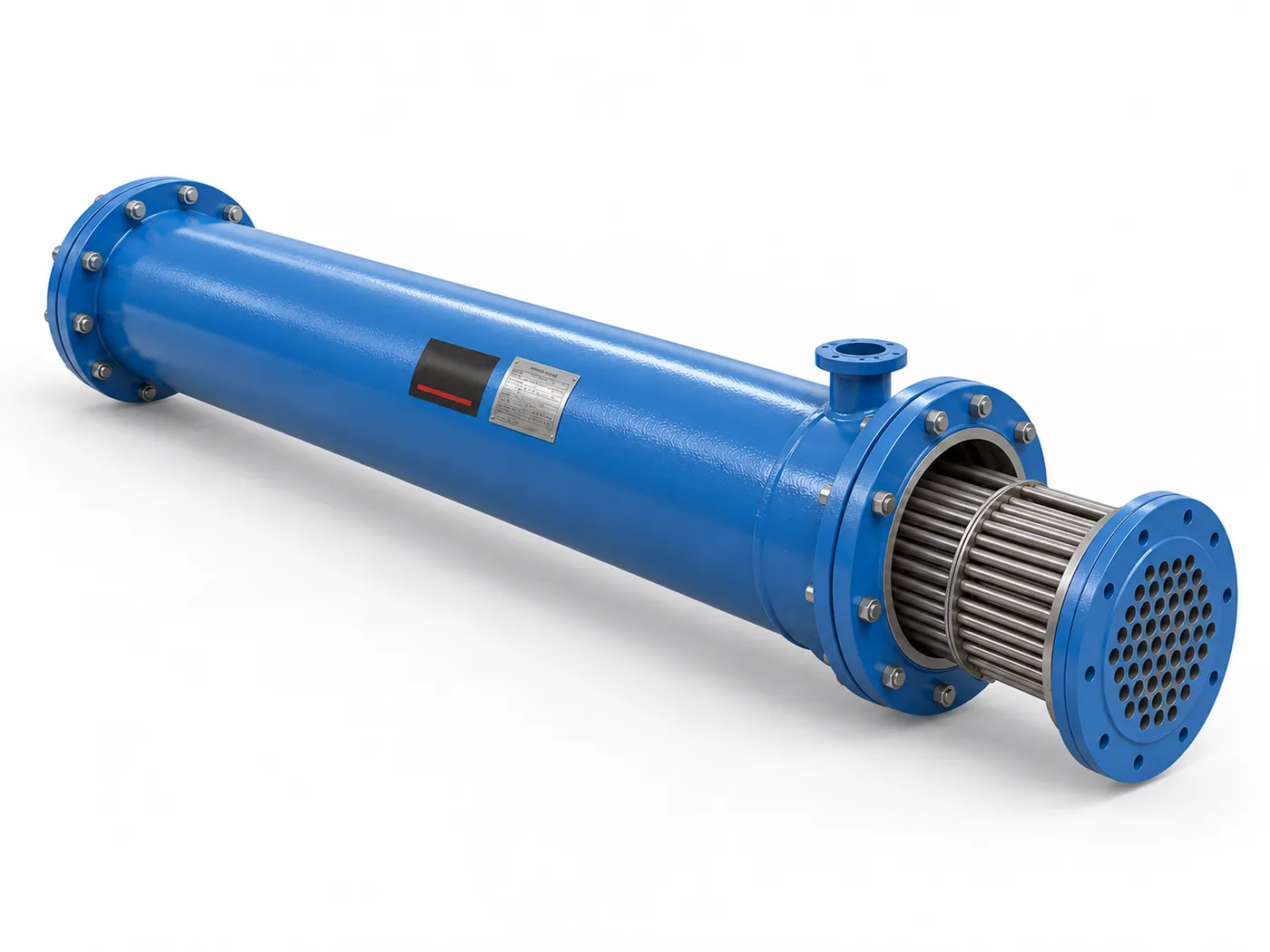
SERIES • AFTERCOOLER
Water-Cooled 51 Series
Fifteen shell and tube models from 38 to 4,785 SCFM, all 51-1/8 inches long.
+ Learn MoreCommon FAQs
Oil is on the shell side, across the baffled tube bundle; water is in the tubes, entering and leaving through the cast iron bonnets. When replacing a unit, note which connections carried which fluid on the old one.
Only if the water side is at higher pressure. Running the water side below the oil pressure means any leak is oil into water, which is easier to detect and less damaging to the machine.
Count the water connections on the bonnets and the partitions inside them: a two-pass unit has both connections on one bonnet with one partition; a four-pass has partitions in both. The STA model number does not encode the pass count.