
1-805-484-2992
Quotes - Engineering - SalesHydraulic Oil Cooling
Every horsepower a hydraulic system does not deliver as work ends up in the oil as heat.
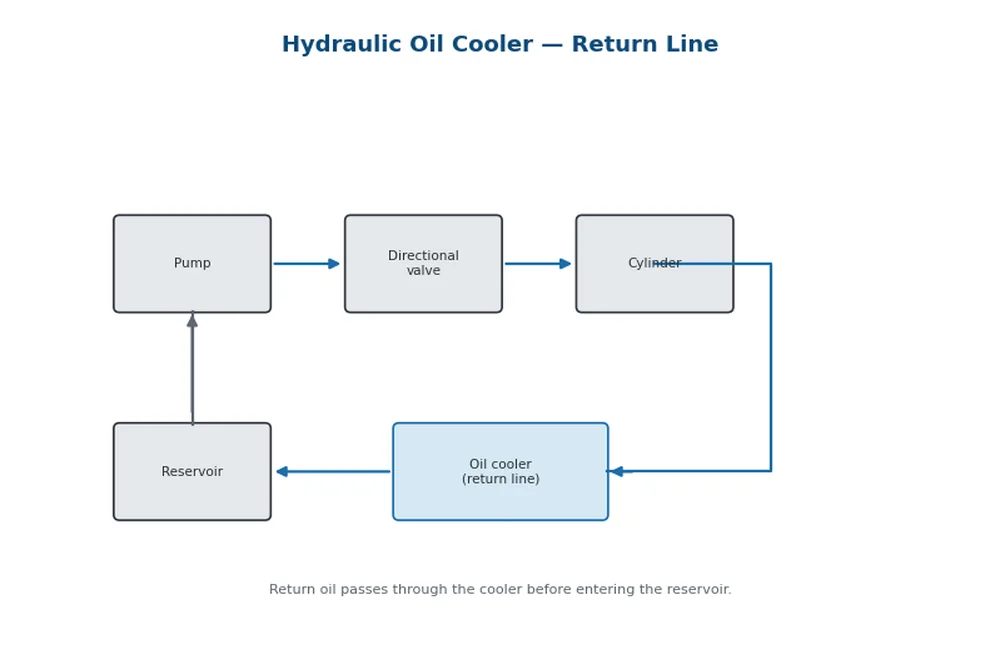
Relief valve losses, pump inefficiency and throttling all heat the fluid, and above about 140°F hydraulic oil oxidises faster, seals harden and viscosity falls below what the pump needs. A cooler in the return line, sized for the system's heat rejection, holds the reservoir where it should be. The STA Series does this with oil on the shell side across baffled copper tubes and water through the tubes, so the oil-side pressure drop stays low even at full return flow.
 Power Units
 Presses
 Injection Molding
 Mobile Equipment
Sizing Checklist
From the STA selection method.
Checklist
- Oil flow (GPM) and required temperature drop
- Oil type and viscosity at operating temperature
- Water inlet temperature and available flow
- Maximum oil-side pressure drop the return line allows
IPAC Ranges
- Shell & Tube Oil Coolers — Seventeen sizes from a 3 inch shell 14 inches long to an 8 inch shell 72 inches long
- Packaged Coolers — Nine packaged models from 62,000 to 476,000 BTU/hr
| RANGE | TYPE | COVERS | RATING | PART NUMBERS |
| Shell & Tube Oil Coolers | Shell & Tube Oil Cooler | Seventeen sizes from a 3 inch shell 14 inches long to an 8 inch shell 72 inches long | Call for rating | 17 |
| Packaged Coolers | Closed-Circuit Water Cooler | Nine packaged models from 62,000 to 476,000 BTU/hr | Call for rating | 9 |
More About Hydraulic Oil Cooling
Selecting an STA by the MBH Method
Selection uses the MBH method on the STA data sheet. Heat load in MBH is oil flow in GPM times 200 times the oil temperature drop, divided by 1,000, for light turbine oil. The published capacity of each STA size is then corrected for the actual water inlet temperature (factor 0.71 at 70°F to 2.56 at 120°F), the oil outlet temperature (2.94 at 110°F to 0.52 at 175°F) and any glycol in the water (1.00 at 0 percent to 0.87 at 50 percent). Two-pass and four-pass charts give the oil-side pressure drop at each flow.
When There Is No Cooling Water
Where cooling water is not available, an STA cooler can be fed from a WAC closed-circuit cooler outside the plant, keeping a clean glycol loop between the two.
Related
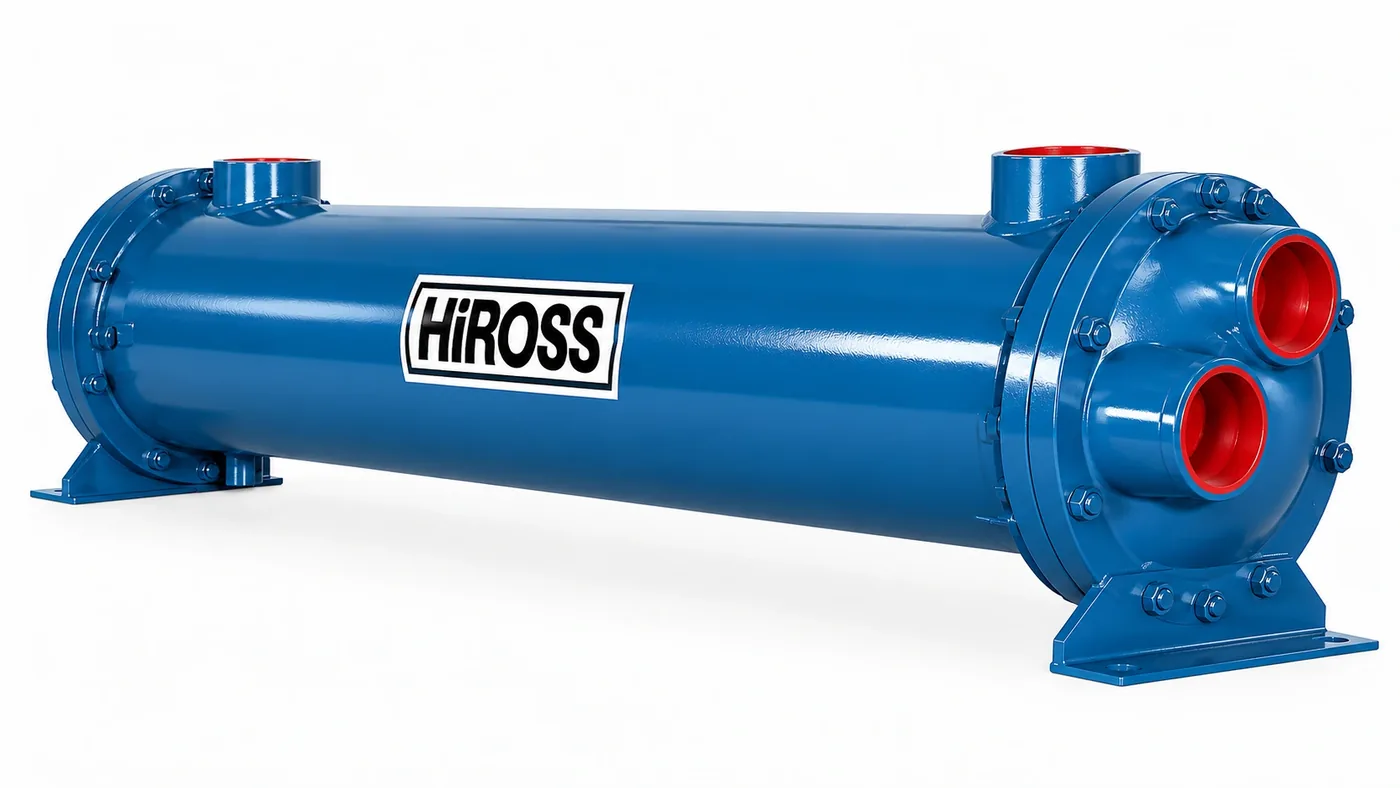
SERIES • OIL COOLER
Shell & Tube Oil Coolers
Seventeen sizes from a 3 inch shell 14 inches long to an 8 inch shell 72 inches long.
+ Learn More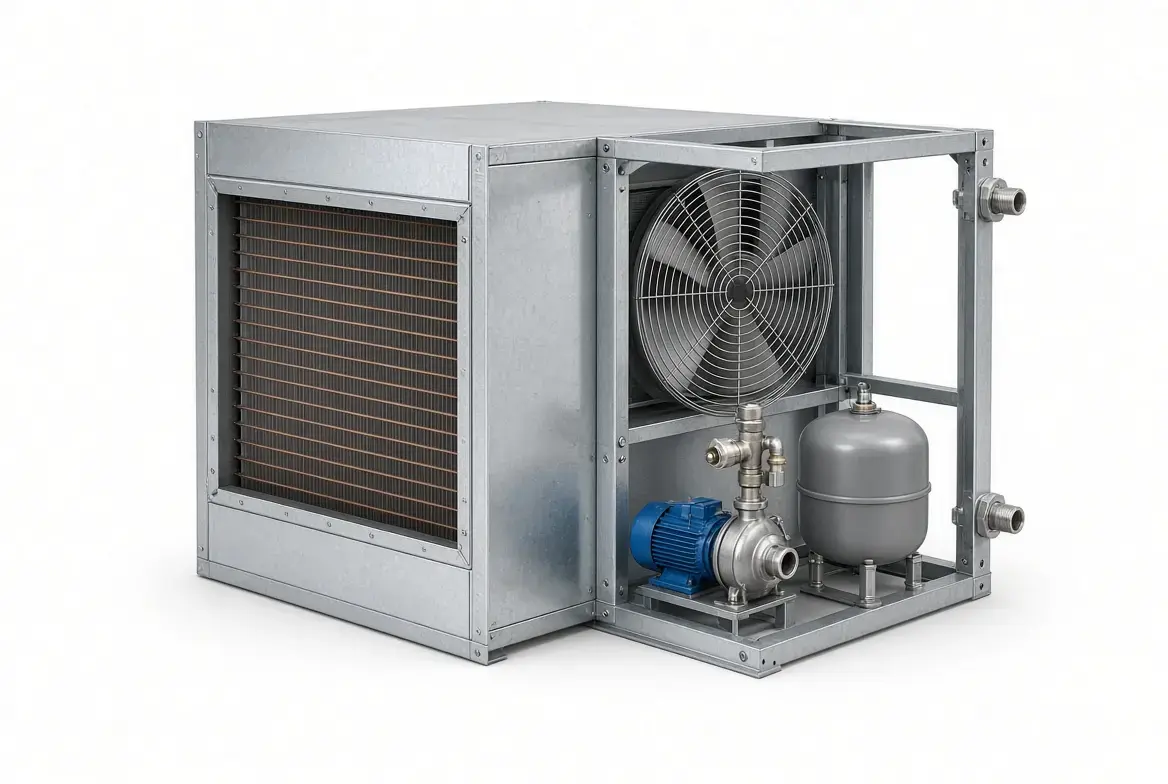
SERIES • FLUID COOLER
Packaged Coolers
Nine packaged models from 62,000 to 476,000 BTU/hr.
+ Learn MoreCommon FAQs
Above about 140°F oxidation accelerates, seals harden and viscosity falls below what the pump needs. Most systems are held at 110 to 130°F in the reservoir, which is the outlet temperature an STA cooler is sized to.
In the return line ahead of the reservoir, where the pressure is low and the full flow passes. The STA takes oil on the shell side so the return-line pressure drop stays small even at full flow.
The MBH method uses a factor of 200 for light turbine oil. Heavier or more viscous fluids transfer heat less readily; tell us the fluid and its viscosity at operating temperature and we correct the selection.